

What Is THCA Isolate? Uses, Effects & Legality in the UK
Definition: THCA Isolate
THCA isolate is a purified cannabis extract containing almost exclusively tetrahydrocannabinolic acid (THCA), typically reaching purity levels of 98–99%.
It is produced through advanced extraction and crystallisation processes that remove other cannabinoids, plant compounds and impurities. The result is a highly refined cannabinoid product that usually appears as a crystalline powder or small diamond-like crystals.
Unlike THC, THCA in its natural form is non-psychoactive. However, when exposed to heat through processes such as vaping, smoking or cooking, THCA converts into THC through a chemical reaction called decarboxylation.
Because of its purity and chemical properties, THCA isolate is considered one of the most refined cannabinoid extracts available today.
Quick Facts About THCA Isolate
| Attribute | Information |
|---|---|
| Cannabinoid | THCA |
| Full Name | Tetrahydrocannabinolic Acid |
| Purity | Typically 98–99% |
| Appearance | White crystalline powder or crystals |
| Source | Cannabis plant |
| Psychoactive | No (unless heated) |
| Converts Into | THC when heated |
These characteristics make THCA isolate one of the most chemically pure cannabinoid extracts available in the cannabis industry.
What Is THCA?
THCA (tetrahydrocannabinolic acid) is a naturally occurring cannabinoid found in raw cannabis plants.
It is the acidic precursor to THC, meaning THC is formed when THCA undergoes a chemical transformation caused by heat. This transformation is called decarboxylation.
When cannabis is heated during smoking, vaping or cooking, THCA loses a carboxyl group and becomes THC.
Key characteristics of THCA
| Property | Description |
|---|---|
| Chemical name | Tetrahydrocannabinolic acid |
| Found in | Raw cannabis plants |
| Psychoactive | No |
| Converts to | THC when heated |
| Cannabinoid class | Acidic cannabinoid |
Most THC present in cannabis products originally begins as THCA within the plant.
THCA vs THC
Although THCA and THC are closely related molecules, they behave very differently due to a small difference in chemical structure.
| Feature | THCA | THC |
|---|---|---|
| Chemical form | Acidic cannabinoid | Neutral cannabinoid |
| Psychoactive | No | Yes |
| Found in | Raw cannabis | Heated cannabis |
| Conversion | Converts into THC through heat | Already active |
This difference explains why raw cannabis plants do not produce the same psychoactive effects as heated cannabis products.
THCA has a different molecular structure than THC, which affects how it interacts with the body.
What Does THCA Isolate Look Like?
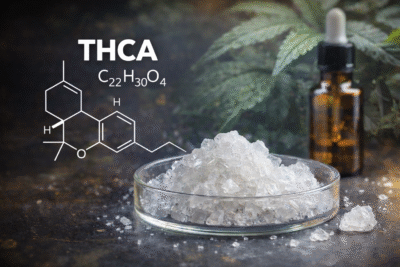
THCA isolate typically appears as:
• fine crystalline powder
• diamond-like crystals
• translucent white particles
High-purity THCA isolates often resemble sugar crystals or powdered snow depending on the crystallisation process used during extraction.
The appearance may vary slightly depending on purification methods and solvent removal techniques.
How THCA Isolate Is Produced
Producing THCA isolate requires advanced extraction and refinement techniques designed to separate THCA from other plant compounds.
1. Cannabis Extraction
Cannabinoids are extracted from cannabis plants using specialised extraction methods such as:
• CO₂ extraction
• ethanol extraction
• hydrocarbon extraction
This produces a cannabinoid-rich concentrate.
2. Winterisation
The extract is then purified to remove fats, waxes and unwanted plant materials.
3. Crystallisation
Through precise temperature control, THCA molecules begin forming crystalline structures.
4. Isolation and Purification
The crystals are separated, dried and refined to produce ultra-pure THCA isolate.
The final result is a cannabinoid extract containing extremely high levels of THCA with minimal impurities.
What Is THCA Isolate Used For?
THCA isolate is valued primarily for its purity and versatility.
Because isolates contain only a single cannabinoid, they allow users to work with THCA without other cannabinoids influencing the formulation.
Common uses include:
• cannabinoid research and experimentation
• terpene blending
• concentrate formulation
• controlled cannabinoid dosing
The purity of isolates allows for precise cannabinoid formulation, which is why they are widely used in cannabinoid product development.
Terpenes and THCA Isolate
Terpenes are aromatic compounds naturally found in cannabis and many other plants.
They are responsible for the flavours and aromas associated with different cannabis strains.
When combined with cannabinoid isolates, terpenes can recreate the flavour profiles of well-known strains such as:
• Blue Cheese
• Runtz
• Gelato
• Lemon Haze
Blending terpenes with cannabinoid isolates allows users to customise both aroma and flavour while maintaining cannabinoid purity.
Is THCA Legal in the UK?
The legal status of cannabinoids in the United Kingdom depends on several regulatory factors including THC content, product classification and compliance with controlled substance regulations.
Cannabinoid products sold in the UK generally aim to comply with regulations relating to THC limits and controlled cannabinoids.
Consumers interested in cannabinoid products should ensure that products come from reputable suppliers that provide:
• third-party laboratory testing
• transparent cannabinoid content
• compliance with UK regulations
Regulatory frameworks may change over time, so it is always important to stay informed about the current legal landscape surrounding cannabinoids.
Why Cannabinoid Purity Matters
One reason isolates are popular is their exceptional purity and consistency.
High-quality cannabinoid isolates provide several advantages:
• predictable cannabinoid concentrations
• consistent product quality
• minimal plant contaminants
• easier formulation with other compounds
For researchers and cannabinoid enthusiasts, isolates offer a way to work with single cannabinoids in highly refined form.
Cannabinoid Glossary
THCA
Tetrahydrocannabinolic acid, a naturally occurring cannabinoid found in raw cannabis that converts into THC when heated.
THC
The primary psychoactive cannabinoid produced when THCA undergoes decarboxylation.
Terpenes
Aromatic compounds found in cannabis and other plants that influence flavour and scent.
Decarboxylation
A chemical reaction in which heat converts THCA into THC by removing a carboxyl group.
Frequently Asked Questions
What is THCA isolate?
THCA isolate is a highly purified cannabinoid extract containing almost exclusively tetrahydrocannabinolic acid, typically refined to purity levels of 98–99%.
Does THCA isolate contain THC?
In its raw form, THCA isolate contains very little or no THC. However, THCA can convert into THC when exposed to heat through decarboxylation.
What does THCA isolate look like?
THCA isolate usually appears as fine crystalline powder or small diamond-like crystals.
Why are cannabinoid isolates used?
Isolates allow manufacturers and researchers to work with a single cannabinoid in extremely pure form, providing precise control over cannabinoid concentrations.
Summary
THCA isolate is one of the most refined cannabinoid extracts available, offering extremely high purity and a unique chemical profile.
Derived from cannabis plants through advanced extraction and crystallisation techniques, THCA isolate typically contains 98–99% tetrahydrocannabinolic acid and appears as crystalline powder or diamonds.
Because THCA converts into THC when heated, understanding its chemistry is important for anyone exploring cannabinoid products and extracts.
As interest in cannabinoids continues to grow, compounds such as THCA are becoming increasingly relevant within the broader cannabinoid ecosystem.

CBD Flower UK is an independent cannabinoid retailer based in Bromsgrove, West Midlands, founded in 2024. We stock only third-party tested, UK-compliant cannabinoid products including HHCP vapes, HHCP hash, THCX vapes, CBD flower, and more. Every guide we publish is designed to give UK buyers honest, accurate information about legal cannabinoid products.